Circlip Groove Dimensions
Circlip Groove Calculator
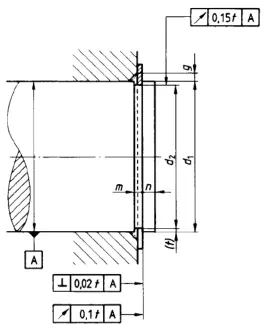
DIN 471 / DIN 472 circlip grooves are machined into the shaft or bore to retain snap rings axially. The groove width m must match the ring thickness s; the groove diameter d₂ (shaft) or d₁ (bore) determines the seating surface. Chamfer n ensures plier access.
Dimensions
Groove Diagram
Frequently Asked Questions
What is the difference between DIN 471 and DIN 472?
DIN 471 covers external (shaft) circlips — the ring sits in a groove machined on the outside of a shaft. DIN 472 covers internal (bore) circlips — the ring sits in a groove inside a bore or housing. In DIN 471 the groove diameter d₂ is smaller than the shaft d; in DIN 472 the groove diameter d₁ is larger than the bore d.
What does groove width (m) mean?
The groove width m is the axial width of the groove cut into the part. It is slightly wider than the ring thickness s to allow easy seating. The values in the DIN tables already include the required clearance.
When should I use the DIN 471 heavy series?
The heavy series uses thicker rings and wider grooves for the same nominal diameter, giving higher axial load capacity. Use it when the applied axial force exceeds the capacity of the normal series for that diameter.
What is the n dimension?
The n value is the minimum edge distance from the groove to the end face of the shaft or bore opening. This space is needed for circlip pliers to seat the ring correctly and to prevent edge damage during assembly.
What groove depth should I machine?
Groove depth = (d − d₂) / 2 for shaft rings, and (d₁ − d) / 2 for bore rings. Both values appear in the results panel above.